
Avoid Capsule Sizing and Shipping Errors: Know Bulk Density
🤖 Explore capsules and bulk density with AI:
💬 ChatGPT🔍 Perplexity🤖 Claude🔮 Google AI Mode🐦 Grok
Key Points
- Bulk density impacts capsule sizing, formulation behavior, and shipping volume
- Loose or tapped density should be selected based on the type of capsule filling equipment
- Excipients can be used to adjust density and improve powder flow
- Accurate bulk density data helps avoid overfilling, packaging issues, and freight miscalculations
The wrong capsule size or packaging container for your product can result in delays, waste of material, or unexpected shipping costs. Bulk density is a key measurement in solid dose manufacturing; it impacts more than just capsule fill, but also packaging decisions, material handling, and freight planning.
For encapsulation, calculating the bulk density of a formulation can help determine the volume a specific dose will have. This allows manufacturers to choose the correct capsule size based on the target fill weight. It can also inform how many drums, bags, or bins are needed for a given quantity of material.
With over a decade of industry experience, Hamdany Sharif, Product Director of Ingredients at Operio Group, shares, “Bulk density is one of the first things production needs to get right. It determines capsule size and affects how powders flow through machines. If bulk density is miscalculated, you risk machine jams, fill weight issues, and delays across the entire manufacturing process.”
This guide covers the step-by-step process of choosing the right capsule size using bulk density. It also goes over how bulk density affects storage and logistics.
Step 1: Know Your Dose
Before calculating bulk density, the total fill weight per capsule needs to be known. Typically expressed in milligrams (mg) and grams (g), the total fill weight includes:
- The active ingredient dose
- Any functional or flow-enhancing excipients
- Binders, fillers, or other non-active materials
Depending on your product’s formulation, a capsule may contain a 100% active ingredient (such as herbal extracts) or a blend of actives and excipients for the purpose of improving flow, stability, or compressibility.
For example, if a supplement contains 500 mg of active ingredient and 100 mg of excipients, the target fill weight is 600 mg. This number will be used in the next step to calculate the required capsule volume based on the powder’s density.
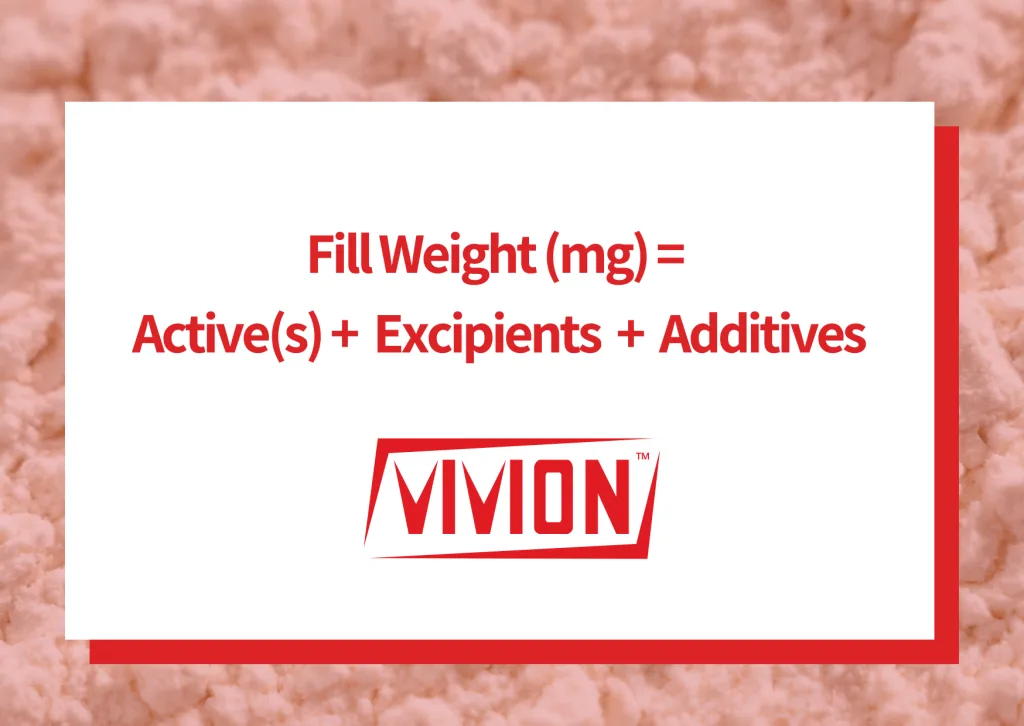
Not taking the total fill weight in consideration can lead to choosing a capsule that’s too small, affecting dose accuracy or manufacturing efficiency.
Step 2: Find the Bulk Density of Your Formula
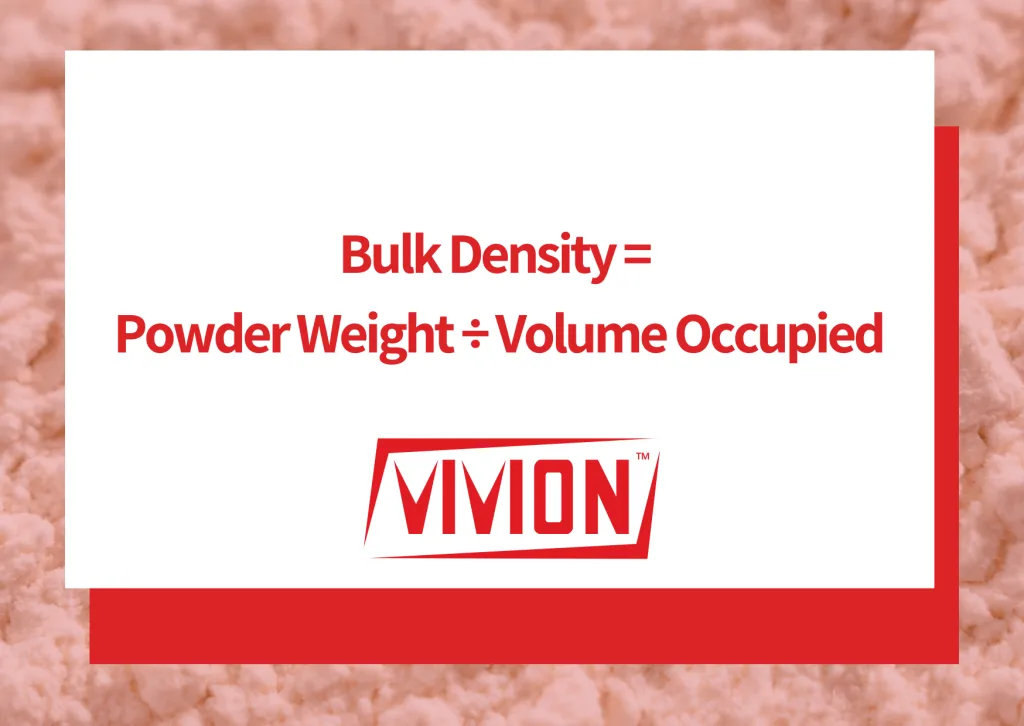
Now that the target fill weight has been determined, the next step is to calculate the bulk density of your formulation. Bulk density dictates how much volume the formulation occupies per unit of weight.
Two measurements are needed to calculate the bulk density:
- The weight of the powder sample (in grams)
- The volume that sample occupies (in cubic centimeters or milliliters)
 Pro-Tip: Use Vivion’s Bulk Density Calculator to assist in this calculation.
There are two types of bulk density needed for encapsulating formulations:
Loose Bulk Density
- Measured by gently pouring powder into a container without tapping or compacting.
- Use this value if your capsule filling process relies on gravity feed or dosator-style machines that do not compress the powder during filling.
Tapped Bulk Density
- Measured after mechanically tapping the container until the powder settles to a consistent volume.
- Use this if your equipment uses tamping pins or a compression mechanism to compact the powder during capsule filling. Most semi-automatic and manual tamping machines operate this way.
Why It Matters
The wrong kind of density can impact calculations. If capsule size is based on loose bulk density, but your machine tamps the powder, you may end up selecting a capsule that’s too big. Conversely, tapped bulk density calculated for non-compacting filler can result in an underfilled capsule.
Pro-Tip: Always measure the density after your full formula is blended, including excipients. Additives like magnesium stearate or microcrystalline cellulose can change the powder’s characteristics and density significantly.
This density value will be used in the next step to calculate the volume your target dose will be and to match that volume to an appropriate capsule size.
Step 3: Choose a Capsule Size That Fits
Once you know your total fill weight and the appropriate density (bulk or tapped), you can calculate the volume your formula will occupy. This step helps you determine which capsule size can hold that volume.
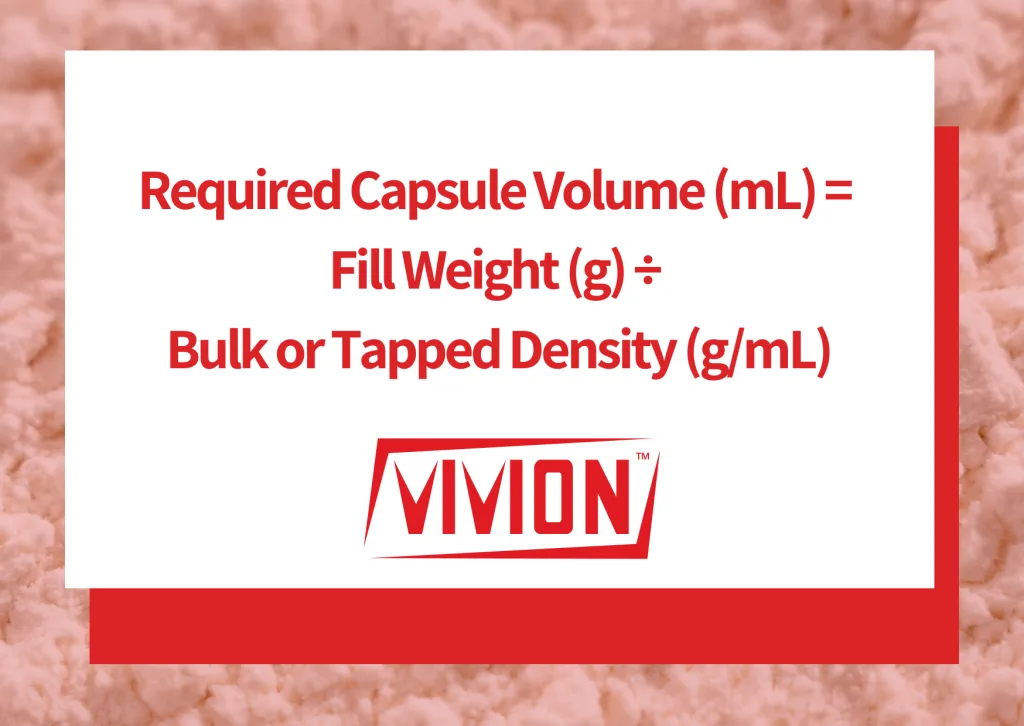
For example, if the fill weight is 0.60 g and the bulk density is 0.50 g/mL, the final volume can be determined by dividing 0.60 (fill weight) by 0.50 (bulk density), which equals 1.2 mL. So this means that the powder will need a capsule that can hold at least 1.2 mL.
How Capsule Sizes Work
Capsules are standardized by volume, not weight. The amount of powder each size can hold depends entirely on the powder’s density.
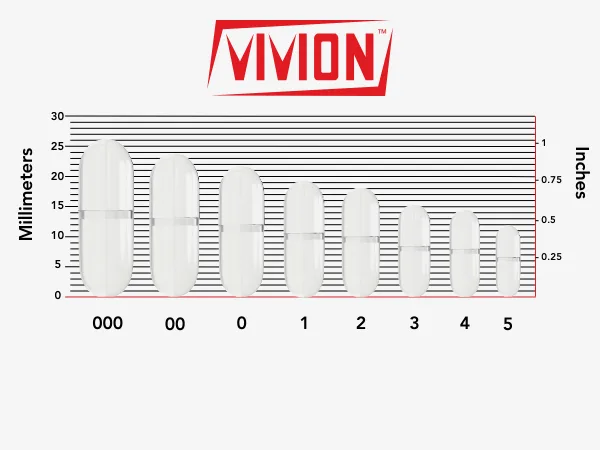
Here are the approximate maximum volumes for common capsule sizes:
- Size 000: 1.27 mL
- Size 00: 0.9 mL
- Size 0: 0.68 mL
- Size 1: 0.48 mL
- Size 2: 0.36 mL
- Size 3: 0.27 mL
- Size 4: 0.2 mL
- Size 5: 0.13 mL
So in the example explained before, the powder will need a size 000 capsule since its volume is 1.2 mL.
Pro-Tip: Use Vivion’s Capsule Size Guide to match your calculated volume to the nearest appropriate size. If your required volume falls between sizes, round up, because it’s better to slightly underfill than to exceed capacity.
Step 4: Adjust With Excipients if Needed
If the calculated fill volume exceeds the maximum capacity of your chosen capsule size, you have two options: move to a larger capsule or reformulate to lower the bulk density of your powder. For many, adjusting the formulation is the preferred path, particularly concerning constraints with the chosen capsule size that exist due to branding, swallowing comfort, or equipment limitations.
Use Excipients to Modify Density
Excipients can help reduce bulk density and improve flow properties. Here are common options:
Microcrystalline Cellulose
Microcrystalline cellulose, or MCC, is a widely used diluent and flow aid. It has a relatively low density and can add bulk to a formulation without affecting the stability or bioavailability.
Dicalcium Phosphate
As a filler that helps with compressibility, dicalcium phosphate is useful when a denser excipient is needed for volume control.
Magnesium Stearate
Magnesium stearate can be used in small amounts as a lubricant, which can improve flow in capsule filling machines.
Silicon Dioxide
Silicon dioxide is a highly effective flow agent. When used in small amounts, it makes blends easier to process through machines.
Why Excipients Help with Bulk Density
Adding excipients increases the overall volume without increasing the active dose. This helps bring the bulk or tapped density of the final blend down to a level that fits within the desired capsule size.
How Bulk Density Affects Material Volume and Logistics
Bulk density doesn’t just assist in choosing the correct capsule size; it can also give an indication of how much physical space the material will take up. This is important when ordering, storing, or shipping.
Knowing the bulk density of materials means:
- Choosing the right container size (bags, drums, bins)
- Accurately estimating how much volume an order will occupy
- Obtaining more accurate shipping quotes upfront
- Preventing overfilling, spillage, or needing last-minute containers

Bulk density plays a critical role in encapsulation. It helps determine the right capsule size for your formulation, ensures consistent and accurate dosing, and prevents problems during encapsulation. Bulk density can also indicate how much physical space a given quantity of material will occupy, which is important when planning packaging, storage, and freight.
By understanding and applying bulk or tapped density data, you can avoid underfilled capsules, reduce fill variability, and prevent unnecessary shipping costs or material waste. Whether you’re formulating a new product or scaling up an existing one, incorporating bulk density into your planning gives you a clearer picture and better control.If you have questions about how to calculate bulk density, how it affects your capsule choice, or how to adjust your formulation, we’re here to help. Vivion’s team can provide support, recommend excipients, and help you plan for both production and logistics. Contact us today to speak with a capsule specialist.

Written by:
Callie Scott
Ask One of Our Experts
Let our team of experts help you navigate our large product range so you don't have to do it by yourself.
To connect for detailed information or request a product sample, complete the form below.