

A Guide to Working with Ascorbic Acid: 4 Key Challenges and How to Solve Them
Key Points
- Choosing the right Ascorbic Acid format has a direct impact on flow, stability, compression, and overall production efficiency.
- Fine, granular, coated, buffered, DC, and USP formats each offer different advantages and drawbacks depending on the equipment and final product.
- Common manufacturing issues like oxidation, blend inconsistency, poor tablet hardness, and caking can often be avoided by selecting the proper format and reviewing key specs.
- Checking CoA details such as purity, moisture content, and particle size helps buyers confirm whether the ingredient will perform reliably in their process.
As one of the most recognizable and versatile ingredients in the global supply chain, Ascorbic Acid serves as a key vitamin across the nutraceutical, food and beverage, and personal care sectors. Within the manufacturing environment, sourcing and purchasing this material can present a challenge; the physical grade of the powder can be the difference between seamless production and costly downtime.
Due to this, formulators and purchasers need a clear understanding of the issues that can happen when manufacturing with Vitamin C. The correct format ensures efficiency, while the wrong one can slow everything down. Here is a guide that depicts the main challenges to watch for when working with Ascorbic Acid and how to handle them.
Common Ascorbic Acid Formats
Ascorbic Acid comes in many forms, and each one behaves differently during manufacturing. The format you choose can affect flow, stability, compression, and how well the ingredient fits into the final product.
- Fine Powder
- Commonly used in drink mixes and capsule blends
- Dissolves quickly
- Can be dusty and may cause uneven blends if particle size varies
- Best for: fast dissolving applications and small-batch blends
- Not ideal when: dust control or tight blend uniformity is critical
- Granular
- Better flow and less dust during handling
- Helps with uniform blending and dosing
- Useful for powders, blends, and some tablet applications
- Can still segregate in blends if paired with much lighter ingredients
- Best for: high-speed equipment and consistent batch-to-batch flow
- Not ideal when: the formula includes a wide range of particle sizes or densities
- Coated
- Offers extra protection against oxidation and moisture
- Helps stabilize sensitive formulations
- Can reduce the acidic taste in some food uses
- Best for: moisture-sensitive formulas or products with flavor constraints
- Not ideal when: rapid solubility or immediate release is required
- Buffered Forms
- Combined with minerals like calcium or sodium
- Creates a gentler pH profile
- Improves taste, solubility, and stomach tolerance
- Best for: chewables, drink mixes, and formulations needing reduced acidity
- Not ideal when: a pure Ascorbic Acid active is required
- Direct Compression (DC)
- Designed for tablet production
- Strong flow and compressibility
- Helps reduce sticking, capping, and weak tablet cores
- Best for: high-speed tablet presses and simple direct compression setups
- Not ideal when: very fast dissolution or custom granulation is needed
- USP Grade
- Meets specific purity and testing standards
- Supports regulated applications
- Provides consistent performance across batches
- Best for: supplement applications requiring strict compliance and traceability
- Not ideal when: cost-driven applications do not require regulatory-grade material
These formats have their own distinct advantages and disadvantages based on your manufacturing equipment, formulation, and final product needs.
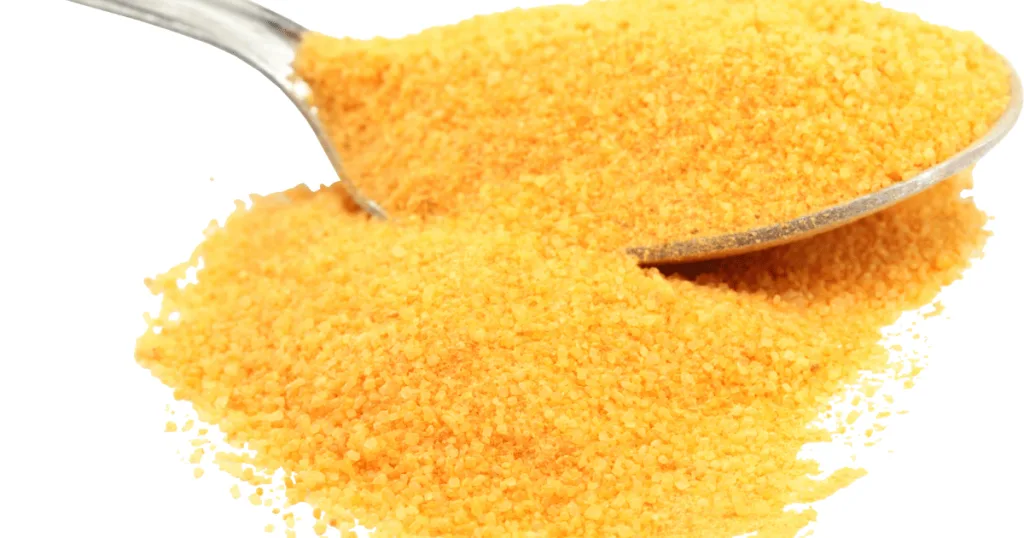
Key Challenges When Working with Ascorbic Acid
Working with Ascorbic Acid has the potential to cause a few common production issues, particularly in high-volume environments. Having a good understanding of these challenges can make it easier to choose the right format of Ascorbic Acid and keep your production running.
1. Stability and Oxidation Issues
Ascorbic Acid is highly reactive. This makes it vulnerable to heat, oxygen and moisture, and whenever it’s exposed to any of these, it begins to oxidize.1 Over time, this can negatively affect Ascorbic Acid’s potency and can make it more difficult for the finished manufactured product to meet its labeled vitamin content.2 Oxidation may also change color, affect taste, or create unwanted variations in more sensitive formulations. For manufacturers, this often means retesting batches, adjusting formulas, or discarding product that falls out of spec, all of which increase time and material costs.
Most of these issues can be managed with the right Ascorbic Acid format as well as appropriate handling. Coated Ascorbic Acid forms slow down exposure to air and moisture, which helps protect the ingredient during blending and storage.3 Granulated formats can sometimes offer better stability than very fine powders, especially when humidity is a problem.4 For regulated supplement applications, Ascorbic Acid USP offers defined testing and purity standards that help stability across batches. Storing the material in a sealed container and in a cool, dry environment also makes a noticeable difference, since temperature changes or repeated handling outside the container can accelerate degradation and lead to avoidable production losses.
2. Blend Uniformity and Flowability Problems
During blending, fine Ascorbic Acid powders can behave unpredictably. Due to the light and dusty particles, it can easily be airborne, cling to equipment surfaces, or settle unevenly within a mix. This can make uniform distribution difficult, particularly in formulations that rely on precise dosing. When uniformity is lost, potency levels may vary from tablet to tablet or across portions of a powder batch, creating quality issues that may lead to batch failures or rework.
Another issue at this stage is flow.5 Powders with very small or irregular particles can bridge in hoppers, slow down feeders, or create stop-and-start flow during production. Any of these problems can bring a production run to a halt, forcing operators to clear equipment or adjust settings just to keep material moving.
These challenges often can be avoided by choosing an Ascorbic Acid format with more predictable behavior. Granular Ascorbic Acid has good flow and reduces dust, which assists blends to stay uniform as they move through mixers and into downstream equipment. Controlled particle size distributions also make a difference, because consistent particles have a tendency to blend and move reliably. Direct compression forms can provide an even smoother flow for tablet manufacturing operations, where uniformity and consistent press feeding are critical to maintain speed and reduce rejects.

3. Compression and Tablet Hardness Challenges
Ascorbic Acid can be difficult to work with in tableting. Standard powder forms can have poor compressibility, meaning that the particles can’t bond well under pressure.6 When the material makes up a majority of the formulation, this is even more noticeable. Sticking and capping are two of the most common problems, leading to powder sticking to punches and dies (which has an impact on tooling wear) or splitting or doming as tablets come off the press.7 These tableting issues slow down production and create more rejected tablets, contributing to material loss and rework.
Finished tablets may also come out weak, cracking or crumbling during handling, coating, or packaging. This can force manufacturers to compensate with additional excipients or processing steps, adding even more time and complexity.
Direct compression can solve many of these issues. Because direct compression formats, like Ascorbic Acid DC, are made to flow and compact more reliably in a tablet press machine, they reduce sticking and produce stronger tablets with fewer steps. Operators can achieve faster speeds without sacrificing tablet quality. DC formats also reduce the need for granulation or extra binder additions, keeping the manufacturing process simpler and predictable.
4. Caking and Handling Difficulties
Ascorbic Acid is sensitive to moisture, and when it’s stored in areas with high humidity, the powder can start to clump or form small lumps over time.8 Once the clumping starts, it becomes more difficult for the powder to travel through hoppers or feeders. This can lead to failed batch weights, inconsistent fills, or uneven ingredient distribution. In many cases, operators must stop production to break up the material manually or adjust equipment settings, which slows throughput and disrupts tightly planned schedules.
This is most noticeable in operating facilities with fluctuating temperatures or humidity, or when bags or containers are open and closed repeatedly. Even slight changes in moisture can interrupt the smooth flow required for consistent batches and weight. Over time, this leads to unexpected downtime, increased labor, and the risk of products falling out of spec.
These problems can be prevented by keeping material in sealed packaging, storing it in dry conditions, and avoiding unnecessary exposure during pre-processing. Choosing formats that handle moisture better, like coated Ascorbic Acid or granulated Ascorbic Acid, can help the ingredient remain loose and easier to work with. When flow stays consistent, production moves faster, batch weights remain accurate, and scheduling stays on track.

Choosing the Right Ascorbic Acid for the Final Product
It becomes easier to match the correct ingredient to your final product when you understand how different forms of Ascorbic Acid behave in production. Each application has its own requirements, and the form chosen can help prevent many of the challenges that show up during blending, compression, or storage.
Powder and drink mixes often work best with fine or granulated Ascorbic Acid because they dissolve easily and distribute well in dry blends. Granulated forms also reduce dust and support uniformity in large batches. Direct compression formats are the most reliable choice for tablet production. Ascorbic Acid DC flows better, compacts consistently, and helps maintain tablet strength without adding extra steps.
Some formulations need extra protection or specific functional traits. Coated versions are useful when you want to improve stability or reduce the acidic taste of Ascorbic Acid. Buffered forms are another option if a gentler pH profile is needed, or to improve tolerability for certain consumer groups.
Whatever the application, aligning the Ascorbic Acid format with both your machinery and product goals makes a marked difference in manufacturing. When the ingredients fit the process, production moves more smoothly; you can avoid many of the problems that lead to downtime or inconsistency.

What to Review Before Purchasing Ascorbic Acid in Bulk
Once you know the Ascorbic Acid format you need, it helps to review a few key details before placing a bulk order. The points below make it easier to determine how the ingredient can perform in your manufacturing process and whether it meets your product specifications.
Material Specifications
- Purity and identify to confirm the ingredient meets your formula needs
- Moisture content to understand how it will handle storage and processing
- Particle size to determine flowability, blending behavior, and dispersion
Documentation and Quality Standards
When reviewing Ascorbic Acid for bulk purchasing, the Certificate of Analysis (CoA) is one of the most important documents to examine. It shows how the material was tested and whether it meets the specifications required for your formulation.
Purity and Identity
The CoA will show the measured purity and the tests used to confirm identity. Buyers usually check:
- Assay / Purity — often listed as something like “99.5% – 100.5% (on dry basis)”
- Identification tests — confirming the ingredient matches an official standard
- Reference standards — such as “Conforms to USP” when applicable
These values help you confirm the material is genuine, consistent, and suitable for supplement or regulated applications.
Moisture Content
Moisture affects stability, flow, and shelf life. On a CoA, this is typically listed as:
- Loss on Drying (LOD) — for example: “≤ 0.4%” with a result showing the tested value, such as “0.10%”
Lower moisture helps reduce clumping and supports better handling during production.
Particle Size
Particle size influences blending behavior, flowability, and dosing. A CoA will usually include:
- Sieve analysis
- Mesh size
- Particle Size Distribution (PSD)
For example, you might see:
- “95% passes through 40 mesh”
This tells you how fine the powder is and whether it matches the needs of your process.
Reviewing these CoA values before ordering helps ensure the material behaves predictably in your equipment and meets the quality expectations of your final product.
Logistics and Planning
- Packaging and lot sizes that work with your operating facility’s storage and handling setup
- Lead times and stock availability to help avoid production delays
Reviewing these items ahead of time can make sourcing smoother and ensure more consistent, efficient production.

Even though Ascorbic Acid is a powerhouse ingredient across supplements, powders, functional foods, and other applications, it doesn’t behave the same in every production setup. Recognizing the challenges around stability, blending, compression, and handling can help in choosing the Ascorbic Acid format that fits both equipment and your final product. Reviewing specifications and documentation before ordering also helps to ensure the material performs the way it needs to from the very beginning.
If you want to look at available formats, review specs, or talk through which option fits your process, contact Vivion today. Our team of experts can help you find the right Ascorbic Acid for your application and support you as you plan your next production run.
Working with Ascorbic Acid FAQs
When should I choose Ascorbic Acid USP?
Choose USP Grade when your product requires defined purity, identity, and testing standards. It is commonly used in regulated supplement applications where consistency and traceability are important.
Does particle size affect how Ascorbic Acid performs in manufacturing?
Yes. Fine powders dissolve quickly but can create dust and blend unevenly. Granular formats offer better flow and reduce segregation. Particle size listed on the CoA helps you predict how the material will behave.
What causes Ascorbic Acid to oxidize?
Heat, oxygen, and moisture accelerate oxidation. This can reduce potency and affect color or flavor. Using coated formats and storing the ingredient in cool, dry conditions helps maintain stability.
How do I prevent caking during storage?
Keep the ingredient sealed, limit exposure to humidity, and store it in a stable environment. Coated and granulated forms tend to resist clumping better than fine powders.
What should I look for on a Certificate of Analysis (CoA)?
Key items include:
-
Assay/purity range (e.g., “99.5% – 100.5%”)
-
Identity tests such as “Conforms to USP”
-
Moisture content (Loss on Drying)
-
Particle size or mesh data
These values help confirm the material meets your production requirements.
Can Ascorbic Acid cause problems during blending?
Fine powders can become airborne or settle unevenly, leading to inconsistent blends. Granular or DC formats help improve uniformity and reduce line stoppages.
Which Ascorbic Acid format dissolves the fastest?
Fine powder dissolves more quickly due to its smaller particles. It is commonly used in drink mixes or applications where rapid solubility matters.
How do I know which format is right for my process?
Consider your equipment, the final dosage form, flow needs, and stability requirements. Reviewing the CoA and talking with a supplier can help you choose the format that aligns with your production conditions.
Does Ascorbic Acid require special storage?
It should be kept sealed, cool, and dry. Avoid repeated opening of containers, exposure to humidity, or large temperature swings to prevent degradation and clumping.
- https://www.tandfonline.com/doi/full/10.1080/10942912.2013.805770 ↩︎
- https://www.sciencedirect.com/science/article/pii/S1549963419302011 ↩︎
- https://www.linkedin.com/pulse/coated-vitamin-c-real-world-5-uses-youll-actually-n0hhf/ ↩︎
- https://www.sciencedirect.com/science/article/abs/pii/S0921883109001575 ↩︎
- https://www.sciencedirect.com/science/article/abs/pii/S0032591002002061 ↩︎
- https://sciensage.info/index.php/JASR/article/download/108/676 ↩︎
- https://ijpsr.com/bft-article/affect-of-granule-sizes-types-and-concentrations-of-lubricants-and-compression-forces-on-tablet-properties/ ↩︎
- https://www.tandfonline.com/doi/full/10.1080/10942912.2013.805770 ↩︎
★★★★★
“Definitely 5 stars for Vivion and my sales rep. Great customer service team too! Thanks for always listening and taking care of needs.”
— Corey B.

Written by:
Callie Scott
Ask One of Our Experts
Let our team of experts help you navigate our large product range so you don't have to do it by yourself.
To connect for detailed information or request a product sample, complete the form below.